
 Search

Water Treatment Flocculant
A water treatment flocculant is a chemical agent used to improve the efficiency of removing suspended particles, colloids, and impurities from water. It works by destabilizing fine particles that would otherwise remain dispersed and difficult to separate. In natural and industrial water systems, many tiny particles carry negative surface charges that cause them to repel each other. A flocculant helps neutralize these charges or bridge particles together, allowing them to form larger aggregates called flocs. These flocs can then be removed more easily through sedimentation, flotation, or filtration.Flocculants are widely used in drinking water treatment, wastewater treatment, industrial process water, sludge dewatering, mining, paper production, textile processing, and chemical manufacturing. In drinking water plants, they assist in clarifying raw water by removing turbidity, algae, silt, and organic matter. In wastewater treatment, they help separate suspended solids, oils, and other contaminants from effluent before discharge or reuse. In industrial applications, they improve recycling of process water, reduce pollution, and support compliance with environmental standards.There are different types of water treatment flocculants, including inorganic flocculants, organic polymer flocculants, and composite formulations. Inorganic flocculants often include aluminum- or iron-based compounds that act through charge neutralization and precipitation. Organic polymer flocculants may be cationic, anionic, or nonionic, depending on the type of particles they are designed to treat. These polymers are especially effective because their long molecular chains can link many particles together, producing strong and compact flocs. Some flocculants are designed for specific pH ranges, water qualities, or treatment goals, making selection an important part of the treatment process.The performance of a flocculant depends on several factors, such as dosage, mixing intensity, contact time, temperature, pH, and the characteristics of the wastewater or raw water. If the dosage is too low, particles may not aggregate sufficiently. If it is too high, flocs may become unstable or treatment costs may increase unnecessarily. For best results, laboratory testing such as jar tests is often used to determine the most suitable product and dosage.Modern flocculants are valued for their high efficiency, low operating cost, and ability to reduce the amount of sludge produced in some systems. They can improve water clarity, shorten settling time, and enhance overall treatment performance. As water resource management becomes more important worldwide, flocculants continue to play a key role in helping industries and municipalities achieve cleaner water and more sustainable operations.
Products
Category:
-
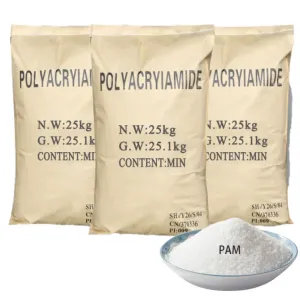
Polyacrylamide Petrochemical Wastewater Treatment Chemicals PAM Flocculant Polymer
Category: Wastewater Treatment ChemicalsBrowse number: 60Number:Release time: 2026-10-16 00:05:52Product DescriptionSpecificationitemPAMPlace of OriginChinaCAS No.9003-05-8Purity58%,60%,90%,98%Other NamesHPAM/CPAM/NPAMAppearanceWhite powder particlesProduct Applications ScenariosPaper mills, dyeing plants, power plants, municipal sewage treatment facilities, etc.Brand Name TaiheqingSelling PointThis product is a water-soluble polymer of high molecular weight. When used in combination with coagulants and flocculants, it mainly acts on the surface of suspended solids through processes such as sweeping and bridging, significantly enhancing the coagulation and flocculation effects. It is...
News
Category:
No search results found!
Case
Category:
No search results found!
Video
Category:
No search results found!
Download
Category:
No search results found!
Job
Category:
No search results found!
Featured Products
-
NEWS
Polyacrylamide Petrochemical Wastewater Treatment Chemicals PAM Flocculant Polymer
Learn more



 Phone
Phone