

Common Problems of Secondary Sedimentation Tank
Reasons for low dissolved oxygen in effluent.
Record whether the residence time of activated sludge in the secondary clarifier is too long. Increase the return sludge flow rate to shorten the residence time.
Check the operating condition of the suction‑scraper. Repair the suction‑scraper in a timely manner to restore its normal working status.
When the water temperature rises suddenly, extend the residence time of wastewater in pre‑treatment facilities such as the equalization tank. Make full use of the volume of the equalization tank to circulate high‑temperature
wastewater, or enhance pre‑aeration to promote water vapor evaporation for temperature reduction.
Sudden increase of effluent BOD₅ and COD
Sudden rise in organic loading or sharp increase in concentration of toxic and harmful substances. Strengthen wastewater quality monitoring and give full play to the function of the equalization tank to keep the influent as balanced as possible.
Insufficient aeration oxygen supply leads to sudden rise of effluent pollutants. Strengthen the management of the aeration tank and adjust various operating parameters in a timely manner.
Problems in the secondary clarifier (e.g. untimely scum removal, abnormal operation of sludge scraper). Conduct regular on‑site inspection, resolve secondary clarifier faults, and carry out rectification immediately once problems are detected.
Causes of Sludge Floating
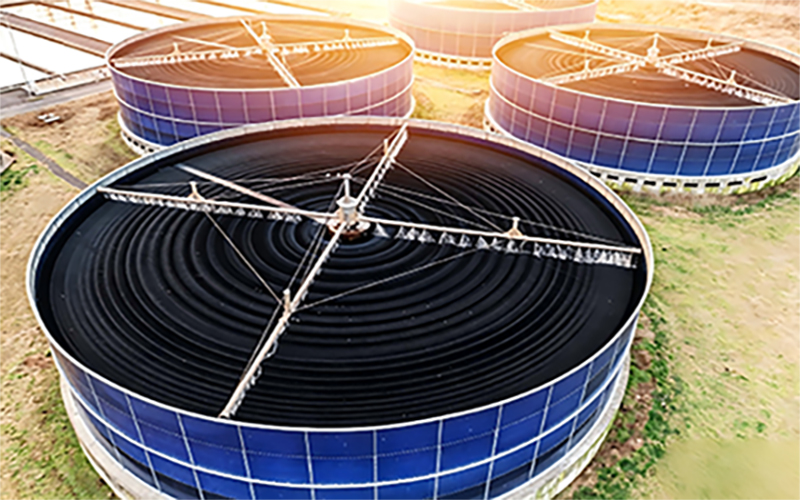
Sludge floating mainly occurs when normal activated sludge stays too long in the secondary clarifier. Dissolved oxygen is gradually consumed, leading to acidification. Generated gases such as hydrogen sulfide (H₂S) attach to sludge flocs, lowering their density and resulting in sludge floating. Discharge excess sludge in a timely manner and increase return‑sludge flow rate to avoid excessive sludge residence time in the secondary clarifier.
01 External Return
1)It returns to the anaerobic tank; for some processes, it returns directly to the aerobic tank.
2)When both Section A and Section O are equipped with independent secondary clarifiers and return‑flow systems, the return ratio of each secondary clarifier varies.
02 Internal Recycle
It recycles mixed liquor from the aerobic tank back to the anoxic tank. Different from external return which mainly conveys sludge, internal recycle transfers mixed liquor. Nitrate‑nitrogen is carried into the anoxic tank via internal recycle for denitrification reaction, and its recycle ratio adopts a different calculation method.
This website uses cookies to ensure you get the best experience on our website.
 Search



 Phone
Phone
Comment
(0)